

“It’s probably just growing pains…”- Why children’s pain deserves to be taken seriously
Many parents hear it at some point.
“Kids bounce back.”
“They’re just sensitive.”
“It’s probably anxiety.”
“They’ll grow out of it.”
And yet, for many tamariki, pain doesn’t simply fade away.
Paediatric pain is real, common, and often dismissed, even by well-meaning adults. When children’s pain is brushed off or delayed, it can quietly shape their confidence, emotions, school life and wellbeing far more than we realise.
At Nurture Paediatrics, we believe children are maurea, unique treasures. Their pain experiences matter. And early, supportive care can make a real difference.
Paediatric pain is more common than most people realise
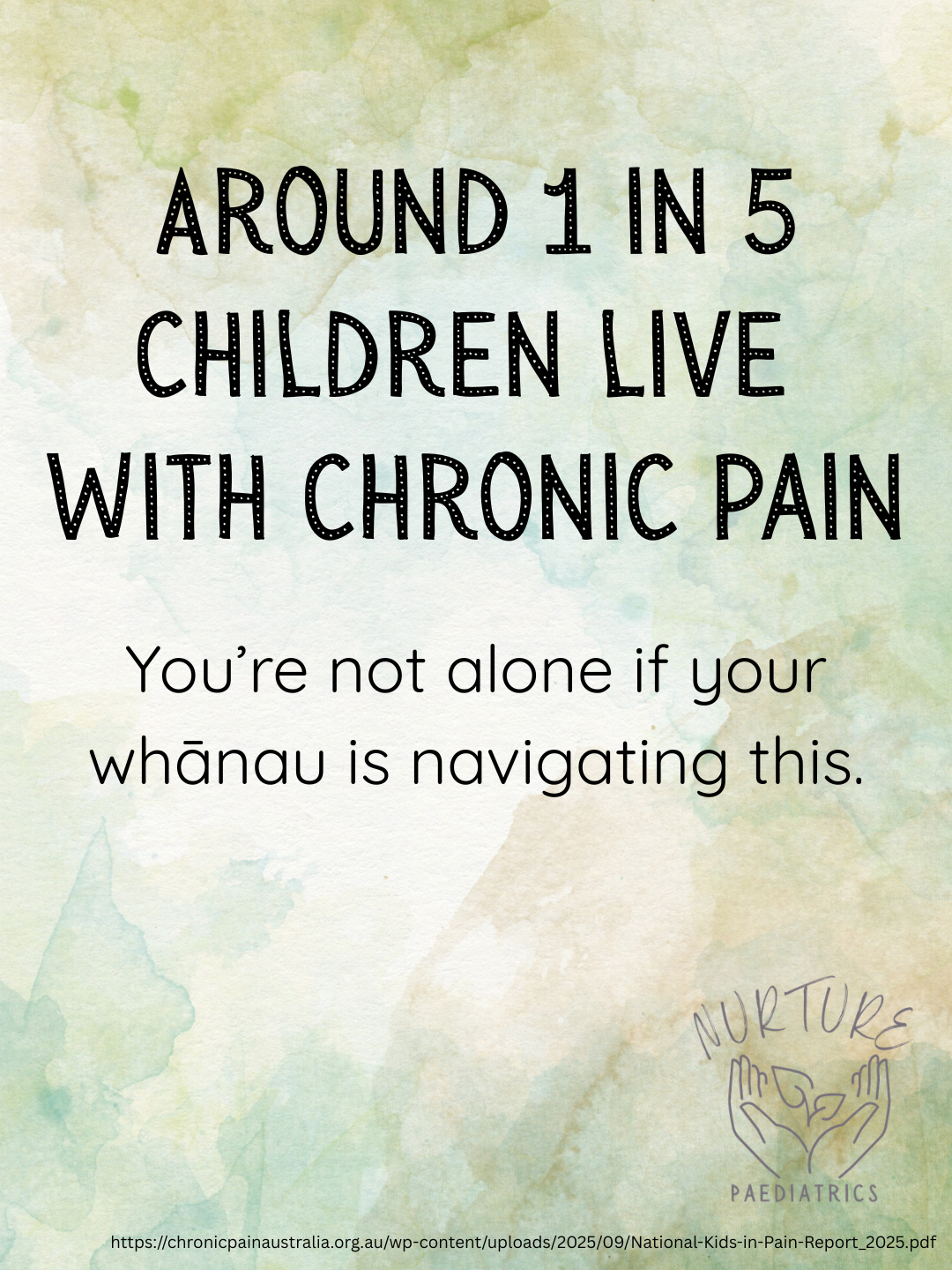
Large international studies now show that around 1 in 5 children live with ongoing or persistent pain.
This pain can affect:
Muscles and joints
Tummies and headaches
Injuries that don’t seem to settle
Pain after illness or medical procedures
Pain with no clear injury at all
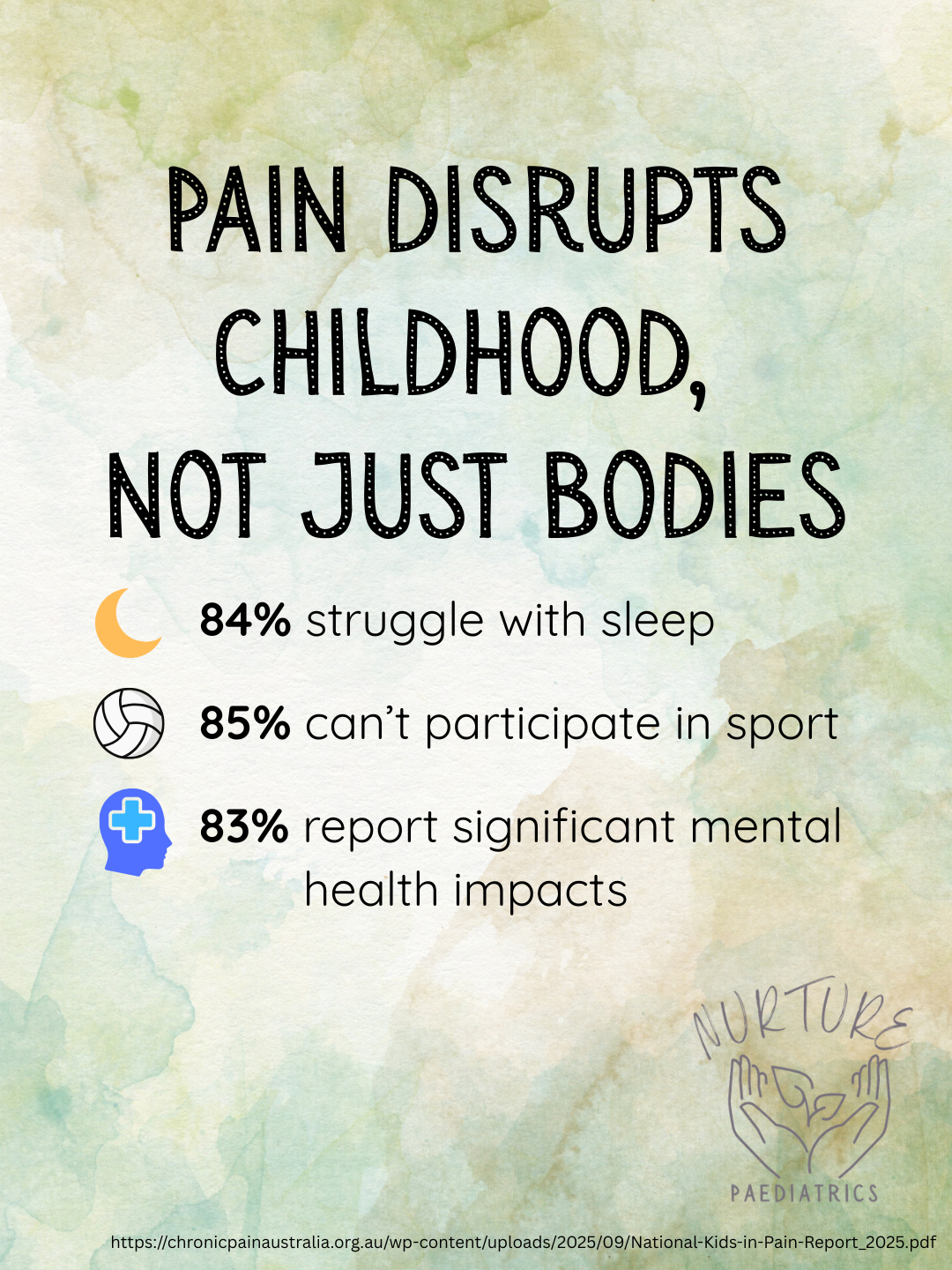
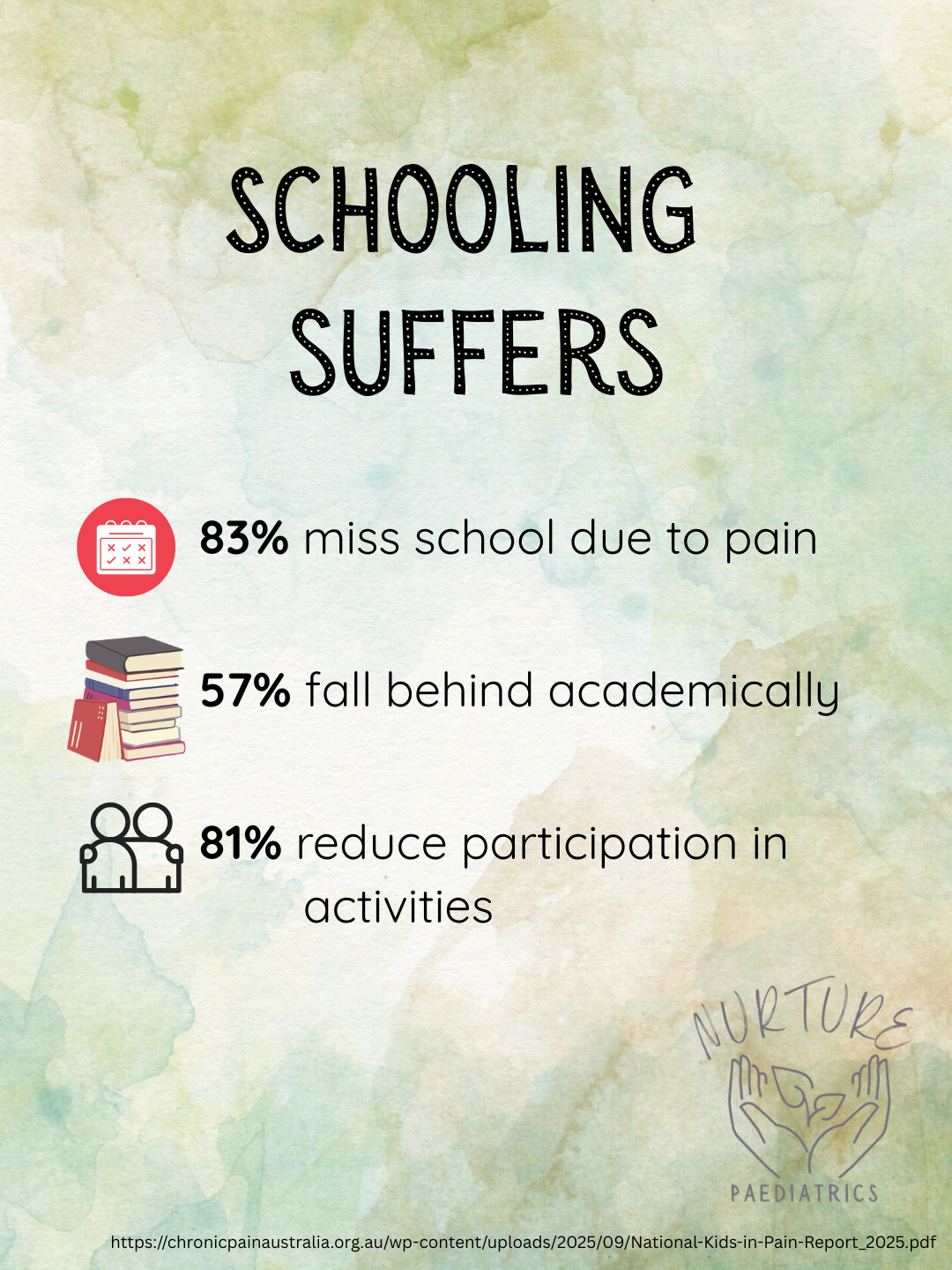
Research from Australasia found that many children with persistent pain:
Miss school regularly
Stop playing sport or being active
Have poor sleep
Feel anxious, low or isolated
Pain doesn’t just hurt physically. It interrupts childhood.
Children’s pain is often dismissed, and that causes harm
One of the most confronting findings from recent reports is how often children are not believed.
In a national survey of children and families:
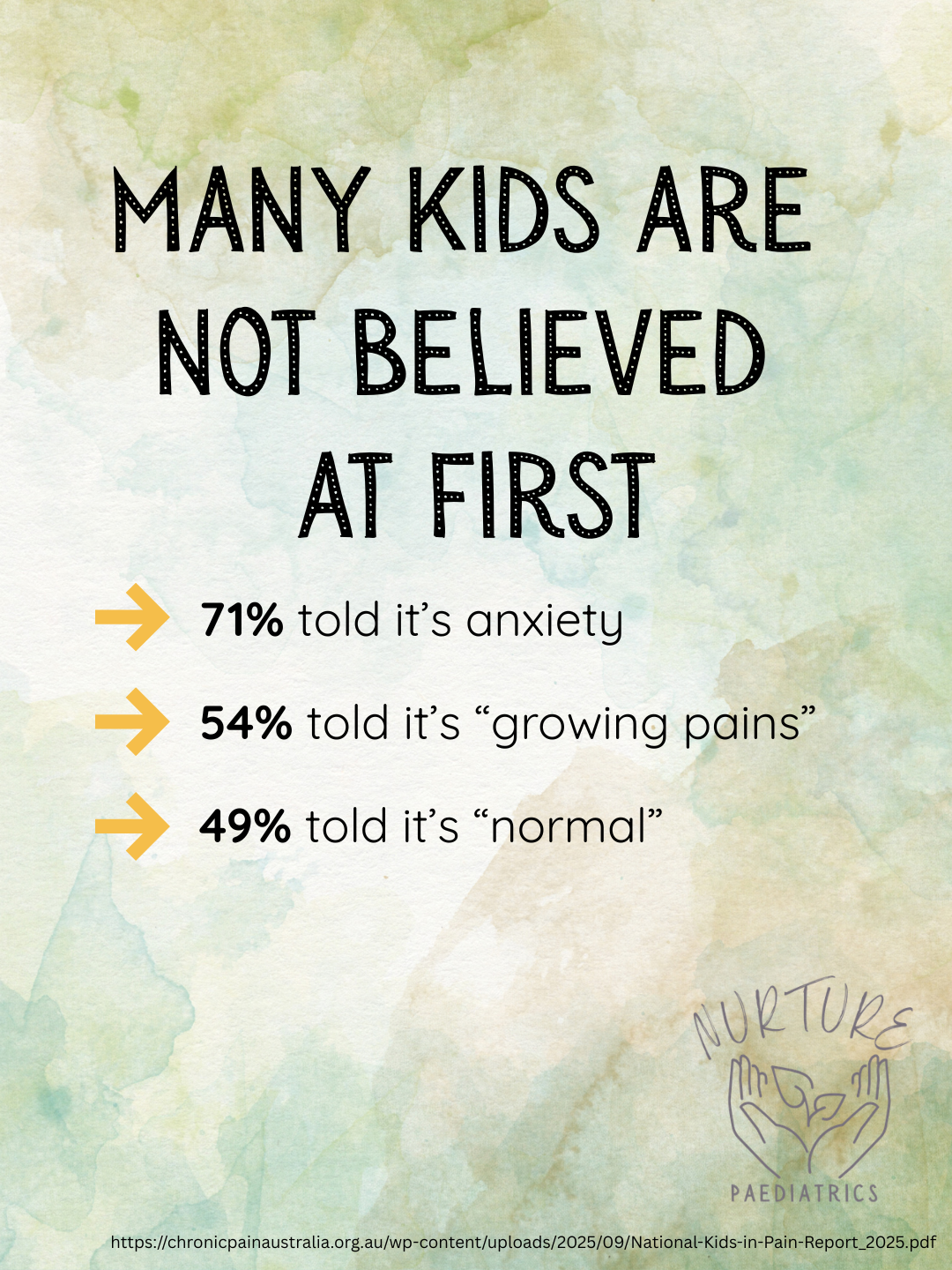
Over half were told their pain was “growing pains”
Many were told it was “normal” or “just anxiety”
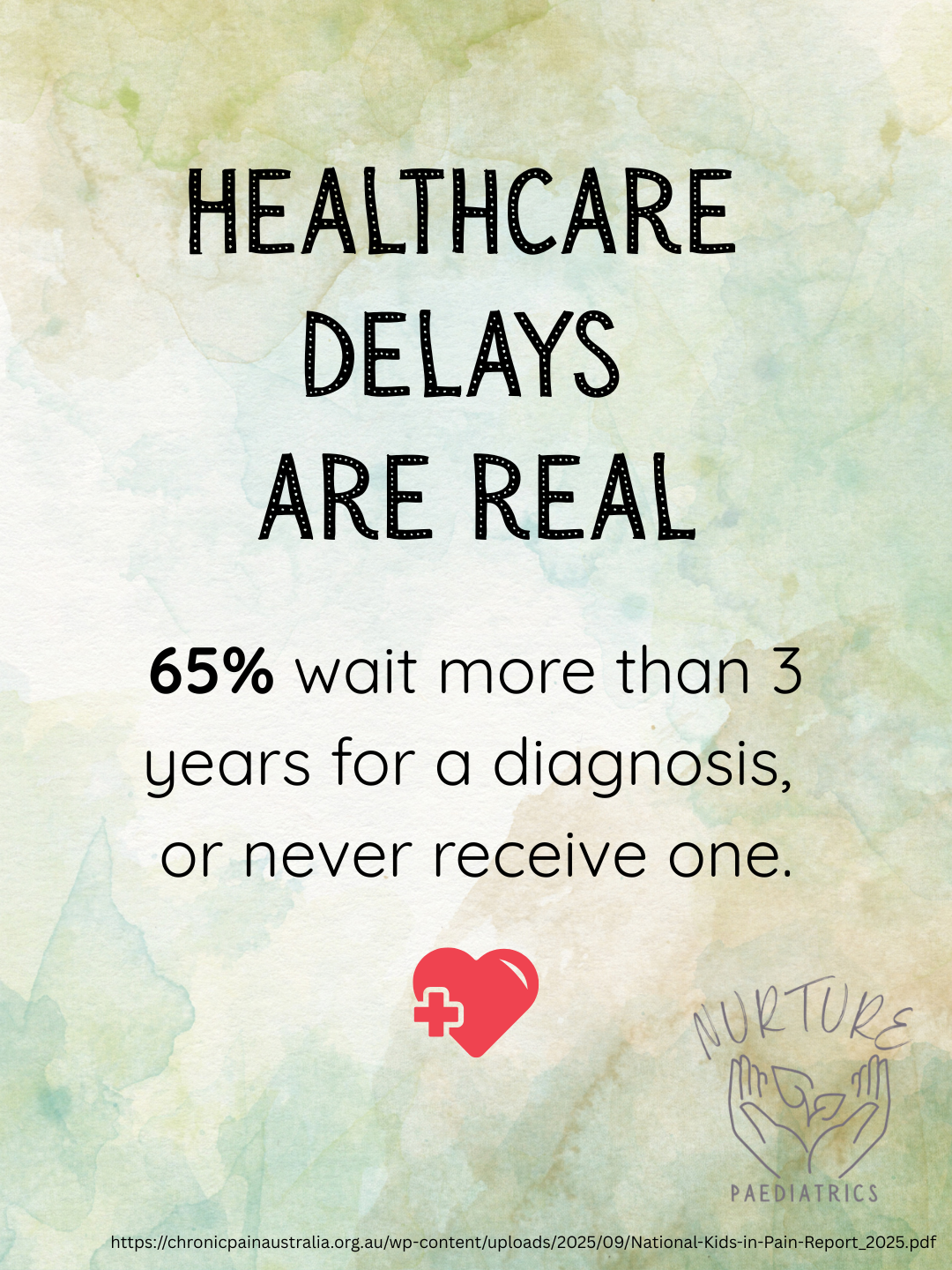
Around two thirds waited years for answers, or never received a clear explanation at all
This doesn’t happen because adults don’t care.
It happens because we are still catching up with what science now understands about pain.
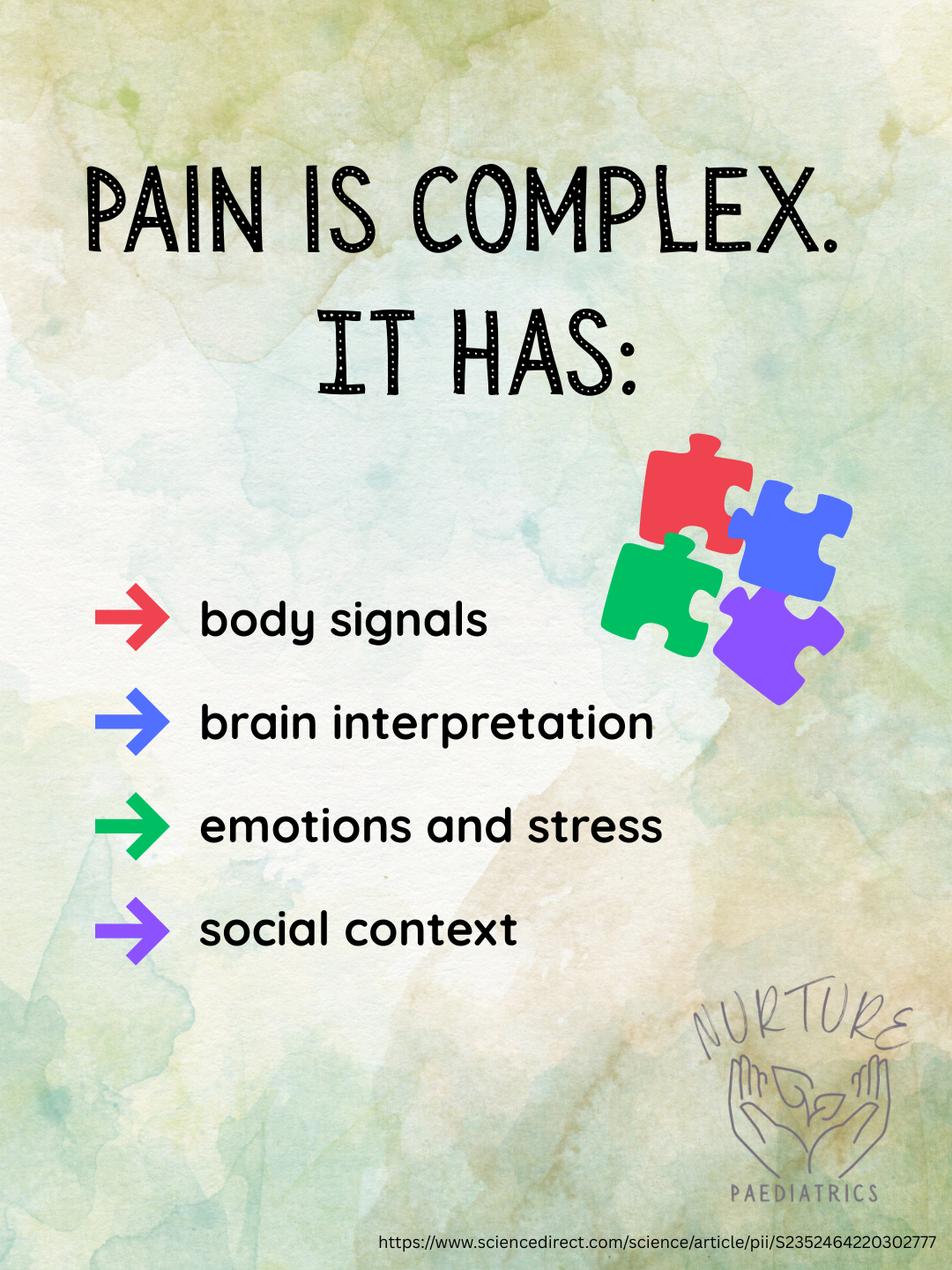
Pain is not “all in the body” or “all in the head”
Modern pain science is clear.
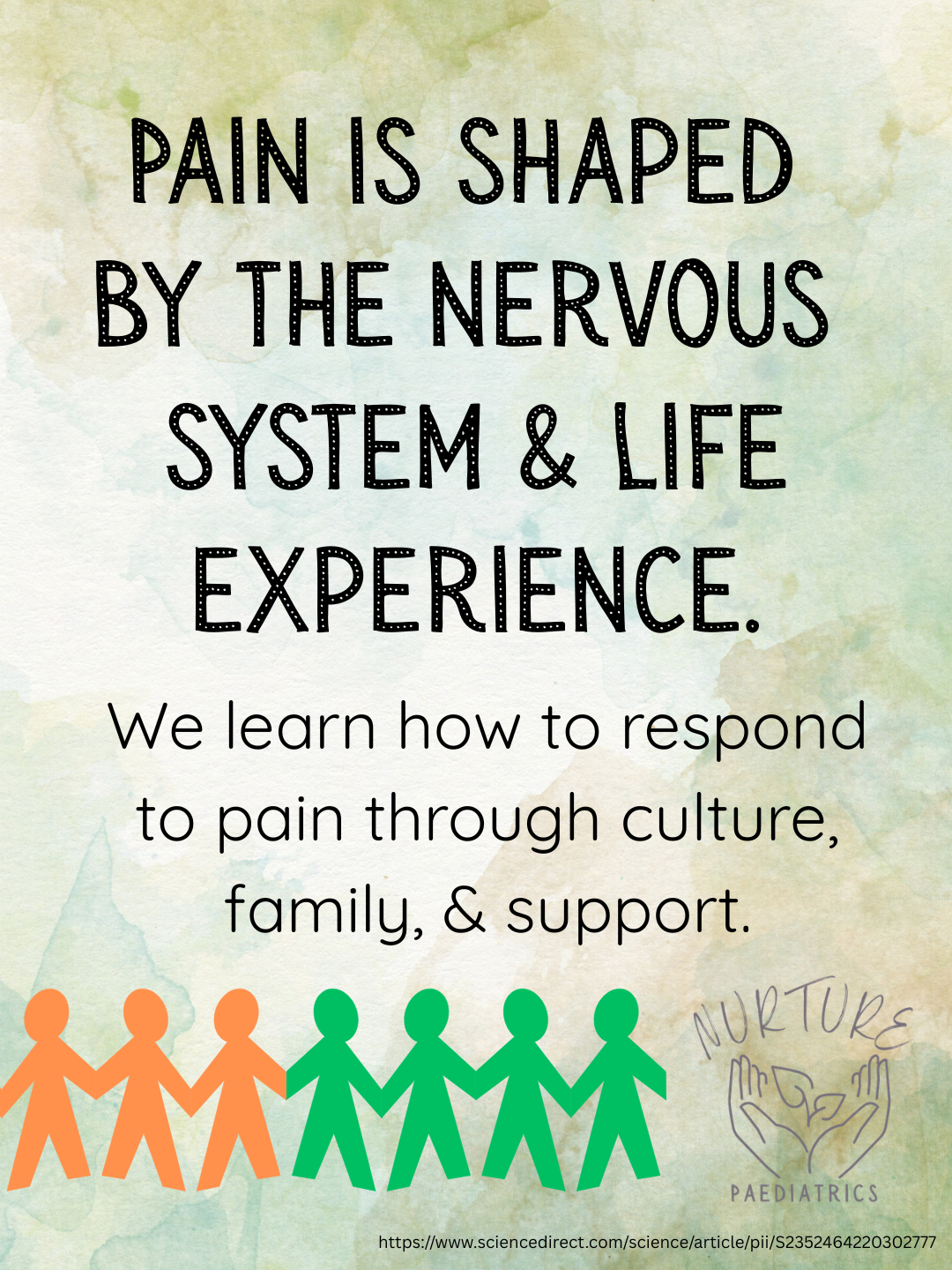
Pain is created by the nervous system, not just by injured tissue.
That means:
Pain is always real, even when scans are normal
Emotions, stress, safety, past experiences and learning all influence pain
Pain is shaped by development, relationships and environment
This is especially important for children.
A child’s brain and nervous system are still developing. They are learning:
How pain feels
What pain means
How to respond to pain
How others respond to their pain
In other words, pain is partly learned.
This does not mean children are making it up.
It means their nervous system is doing its best to protect them, sometimes too well.
The emotional side of pain is learned too
Children learn about pain from:
Adults’ reactions
Language used around pain
School, sport and healthcare experiences
Whether pain is believed or dismissed
If pain is ignored, rushed, or treated as something to “push through”, children may learn:
To fear movement
To hide pain
To feel unsafe in their body
That their experience doesn’t matter
Over time, this can increase pain sensitivity and distress.
The good news?
Pain can also be relearned in safer, more helpful ways.
Why delaying care matters
Waiting and hoping pain will settle can sometimes work.
But when pain:
Persists beyond expected healing
Interferes with school, sleep or play
Leads to fear of movement
Affects mood or confidence
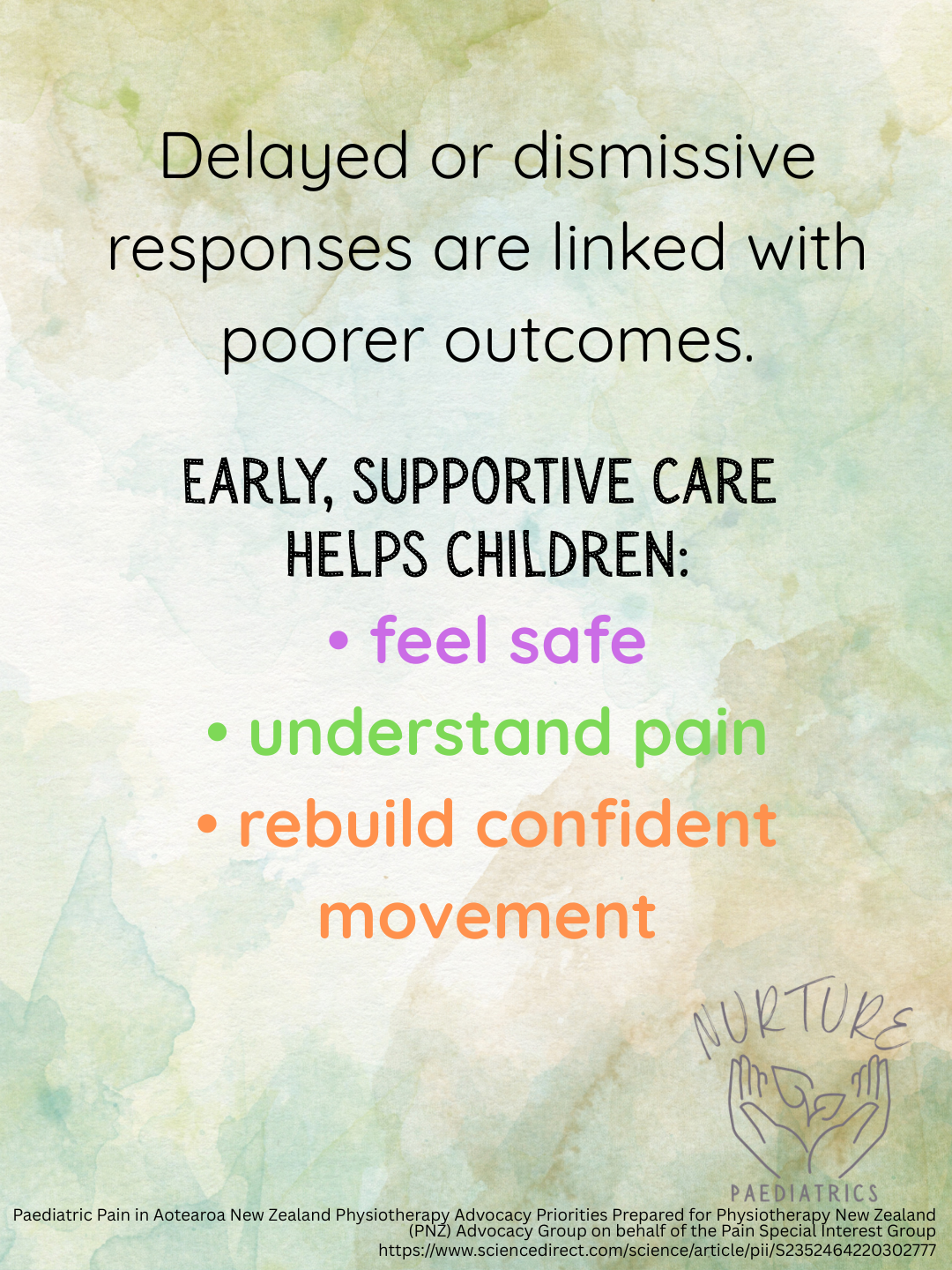
Delaying support can allow pain patterns to become more established.
Early, child-centred intervention helps:
Reduce fear
Build confidence in movement
Support emotional regulation
Prevent pain from becoming entrenched
This is why we gently say:
Don’t brush it off. Don’t wait until it’s “bad enough”.
How Nurture Paediatrics supports children with pain
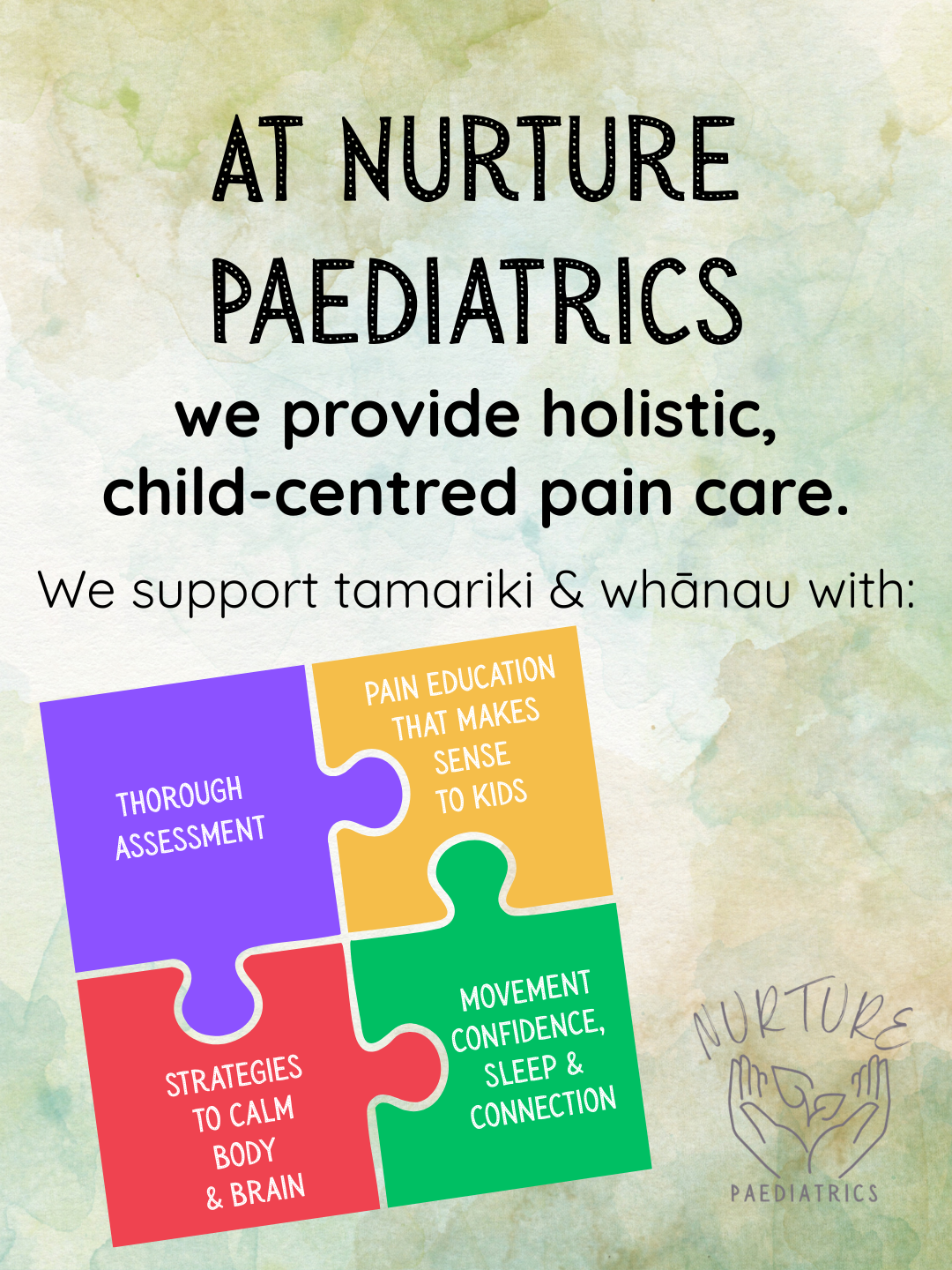
At Nurture Paediatrics, we take a whole-child, whole-whānau approach to pain care.
We help children:
Understand what pain is in age-appropriate ways
Learn that pain does not always mean harm
Rebuild confidence in their body
Develop skills to calm and regulate their nervous system
Return to movement, play, school and sport at a safe pace
We work alongside whānau, not above them.
Our approach is:
Strengths-based
Evidence-informed
Culturally safe
Focused on participation and daily life, not just symptoms
Pain education is a key part of what we do. When children understand their pain, it often becomes less frightening and more manageable.
Helping children build lifelong pain skills
Pain is part of being human.
Scraped knees. Growing bodies. Injuries. Big feelings. Stress. Loss.
We cannot remove all pain from our children’s lives.
But we can help them learn how to understand pain, respond to it, and feel safe in their bodies.
These skills don’t just help now.
They support resilience for life.
A gentle message to parents
If your child’s pain has been dismissed before, you are not alone.
If you’ve been told to wait and see, it makes sense you feel unsure.
Trust your instincts. Your child’s experience is real.
You don’t need to wait until things are unbearable.
You don’t need to have all the answers.
We’re here to walk alongside your whānau.
Ready to learn more?
You can read more about our child-centred pain support here:
👉 https://nurturepaeds.co.nz/pain-management
Or get in touch to talk about what’s been happening for your child.
Together, we can help your child understand pain, rebuild confidence, and feel more at ease in their body again.