

Growing Well Every Day: Small Habits That Help Tamariki Thrive
At Nurture Paediatrics, we often talk with tamariki and whānau about the little things that support health and wellbeing every day.
When a child is experiencing pain, recovering from an injury, navigating big emotions, managing stress, or simply growing and learning, wellbeing is about much more than physical health alone. Our bodies, brains, relationships and sense of belonging are all connected.
The good news? Small, consistent habits can make a big difference.
Wellbeing Is Like a Tree
Imagine a tree.
For a tree to grow strong, it needs sunlight, water, good soil, space to grow and care from its environment. Children are no different.
When tamariki have the right foundations, they are better able to learn, play, move, connect with others and cope with life's challenges.
That doesn't mean every day needs to be perfect. Wellbeing grows through small actions repeated over time.
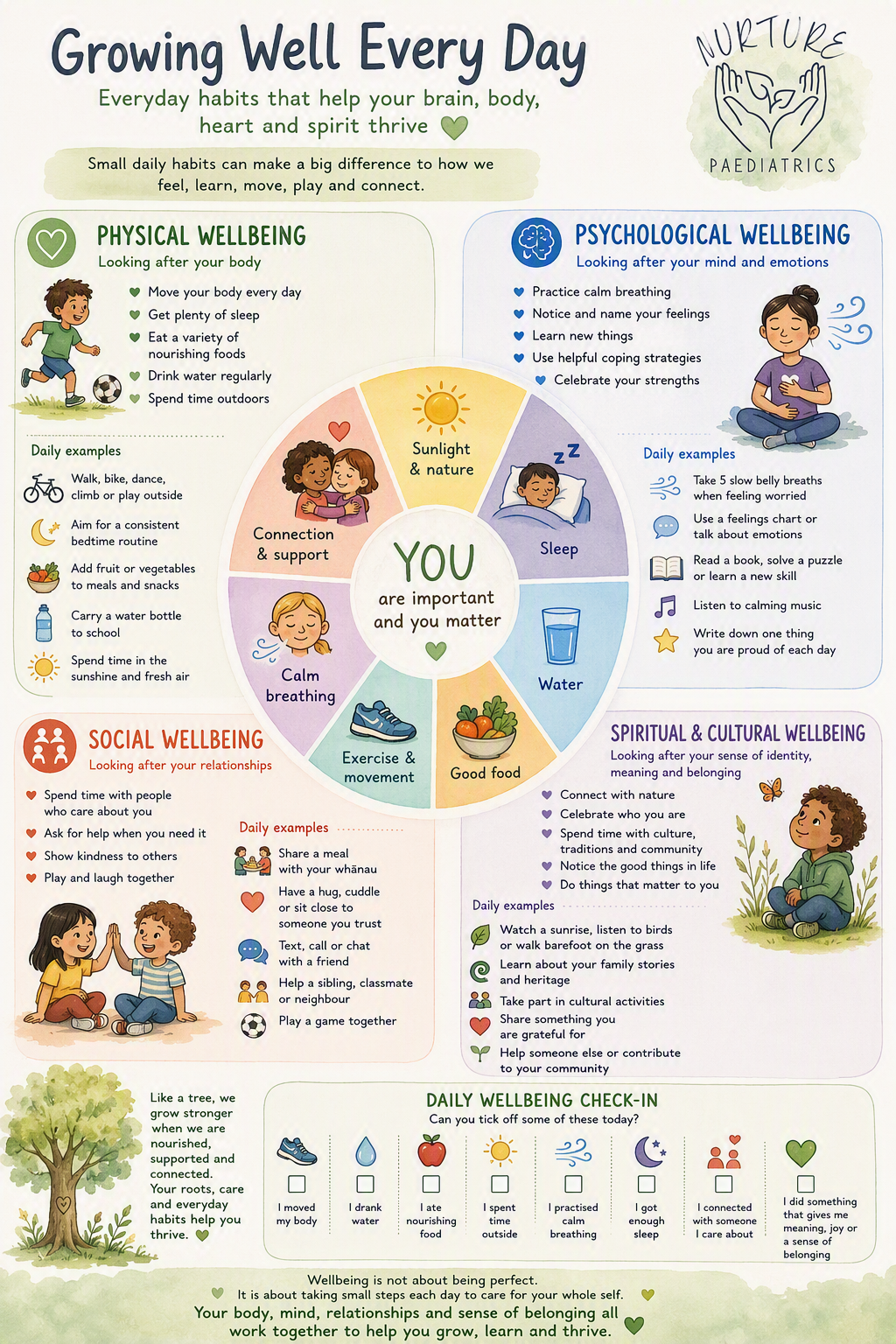
The Everyday Habits That Help Us Thrive
💤 Sleep and Rest
Sleep is one of the most important building blocks for growth, learning and recovery.
A good night's sleep helps children:
Learn and remember new information
Manage emotions
Recover from physical activity
Support immune health
Feel more energised during the day
Simple habits such as a predictable bedtime routine, reducing screens before bed and creating a calm sleep environment can help.
🌬️ Calm Breathing
Breathing is a powerful tool that children carry with them everywhere.
Slow, gentle breathing can help:
Calm the nervous system
Reduce feelings of stress or worry
Improve focus and concentration
Support emotional regulation
Techniques such as belly breathing, star breathing and square breathing can help children feel more settled when things feel overwhelming.
🤗 Connection and Support
Humans are wired for connection.
Feeling safe, supported and loved helps children develop confidence and resilience.
Connection might look like:
A hug from a trusted adult
Talking about the day together
Playing with friends
Sharing a meal as a whānau
Knowing someone is there to listen
Children do not have to navigate challenges alone. Relationships are one of the strongest protective factors for wellbeing.
🏃 Movement and Play
Movement is not just about fitness.
It helps support:
Physical health
Coordination and strength
Emotional wellbeing
Confidence
Sleep quality
Brain health
For children, movement can be fun and playful:
Climbing trees
Riding bikes
Dancing
Swimming
Playing sport
Walking the dog
Exploring the local park
The best movement is often the movement a child enjoys.
☀️ Sunlight and Nature
Spending time outdoors benefits both physical and mental wellbeing.
Time in nature can help children:
Feel calmer
Move more
Improve sleep routines
Develop a sense of curiosity and wonder
Connect with the world around them
Sometimes wellbeing looks as simple as kicking a ball outside, searching for bugs, walking barefoot on the grass or watching the clouds.
🍎 Nourishing Food
Food provides the fuel our bodies and brains need to function well.
A balanced approach to eating helps support:
Growth and development
Energy levels
Learning and concentration
Physical health
Rather than aiming for perfection, we encourage families to focus on variety, balance and positive experiences around food.
💧 Water
Our brains and bodies work best when we are hydrated.
Encouraging regular water intake throughout the day can help support:
Energy levels
Concentration
Physical activity
General health and wellbeing
A drink bottle within easy reach can make a big difference.
Wellbeing Is More Than Physical Health
At Nurture Paediatrics, we view wellbeing through a holistic lens.
🧠 Psychological Wellbeing
This includes:
Understanding emotions
Developing coping skills
Building confidence
Learning and problem-solving
💛 Social Wellbeing
This includes:
Friendships
Family relationships
Feeling connected and supported
Belonging within school and community
🌿 Spiritual and Cultural Wellbeing
This includes:
Knowing who you are
Connecting with culture and values
Spending time in nature
Having a sense of meaning, purpose and belonging
These dimensions of wellbeing work together. When one area is supported, it often helps other areas grow too.
A Gentle Reminder for Whānau
You do not need to do everything at once.
Perhaps today your child:
✅ Drank some water
✅ Went outside for ten minutes
✅ Shared a hug with someone they love
✅ Practised three slow breaths
✅ Ate a nourishing snack
✅ Got a little extra sleep
These small actions matter.
Wellbeing is not about being perfect. It is about creating opportunities, day by day, for tamariki to feel safe, connected, confident and supported to thrive.
At Nurture Paediatrics, we believe every child is a maurea, a unique treasure. Together, through understanding, connection and confident movement, we can help children build the foundations for lifelong wellbeing.
Want to support your child's wellbeing journey?
Our team works alongside tamariki and whānau to support movement, recovery, pain management, participation and overall wellbeing. Get in touch to learn more about how we can tautoko your family. 💚