Why Water? Exploring the benefits of paediatric hydrotherapy
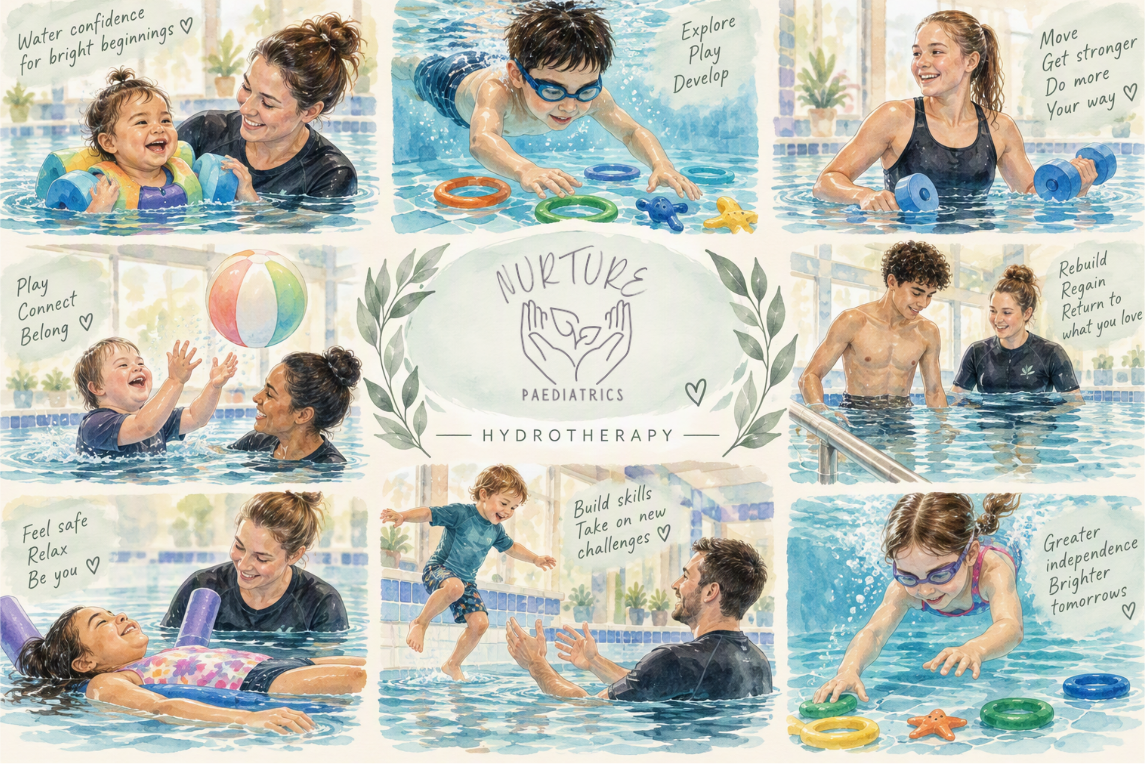
There are many reasons we offer hydrotherapy to kids: decreased weight-bearing, a warm environment… fun!
But why is hydrotherapy recommended & which children can benefit from it the most?
Physiotherapy, whether on land or in water, should always aim to reduce the impact of a child’s injury, condition or pain and improve their function and quality of life- through something that is interesting to them.
We don’t want physio to be repetitive and boring, or something a child dreads going to. We want it to be fun, meaningful and, most importantly, a service that the children we treat can continue to access throughout their lives when they need it.
All activity can be beneficial for our health and wellbeing. For children and adolescents, being in the water can provide unique physical and sensory benefits which support participation in therapy.
so, how does it work?
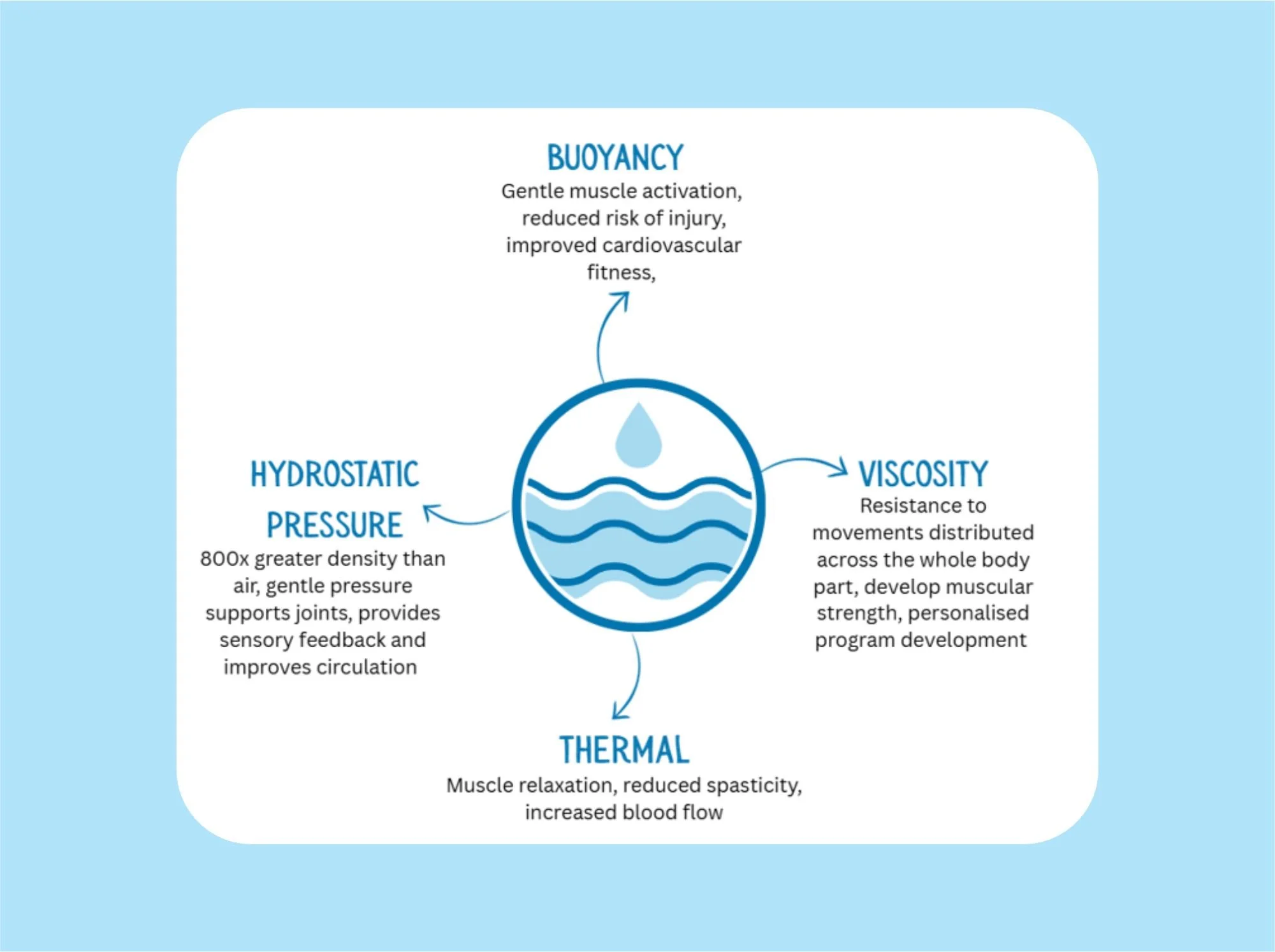
Well, first we need to look at the properties of water: buoyancy, hydrostatic pressure, viscosity and warmth.
Together, these properties can help children practice movements in the water that they may not usually be able to do on land.
This makes hydrotherapy useful, not only for orthopaedic conditions, but also for neurological and developmental conditions, such as, Cerebral Palsy, Down syndrome and developmental disorders, as well as for neurodiverse children who may benefit from its physical and sensory properties.
Hydrotherapy can support improvements in gross motor function, balance, coordination, strength, range of movement and gait. The multisensory nature of hydrotherapy can contribute to both physical and psychological wellbeing, which are important for sustained participation in physiotherapy.
Ultimately, hydrotherapy gives children the opportunity to move, play and build physical skills in an environment that can make movement feel easier- and much more enjoyable!